
Smart Online Shopping Tips for Finding the Best Products and Safest Deals
A good online deal can still turn into a bad buy. The product may be poor, the delivery fee may wipe out the saving, or the returns process may be painful.
The safest way to shop online is to slow down at the right moments. Check the product. Check the seller. Check the terms. Then pay in a way that protects you.

Start with the product, not the discount
Discounts are designed to grab attention. That does not mean the product is right.
Before you compare prices, work out what you actually need. This helps you avoid buying the cheapest item, the flashiest item, or the one with the biggest fake saving.
Make a quick list:
Must-have features
These are the features the product needs to do its job.
Nice-to-have features
These matter, but they should not decide the purchase on their own.
Deal breakers
These could include poor battery life, no UK plug, weak warranty terms, or missing accessories.
For example, if buying wireless earbuds, the must-haves might be good call quality, strong battery life, and a comfortable fit. Noise cancellation may be nice to have. A deal breaker could be no returns once opened, unless faulty.
This simple filter saves time. It also makes reviews easier to judge, because you know what matters before other opinions distract you.
Check product specifications with care. Look for exact model numbers, sizes, materials, compatibility, and what comes in the box. Small details matter online. A photo can make a product look bigger, stronger, or more complete than it is.
Watch for vague wording too. Phrases like “compatible with most devices” are less useful than a clear list of supported models. “Long battery life” means little without an estimated number of hours. “Premium feel” tells you less than the actual material.
When a product has many versions, compare them side by side. A newer model is not always better for your needs. An older version may have the feature you want at a better price.
Research beyond the product page
A product page is a sales page. It can be useful, but it is not the full picture.
Search the product name and model number away from the retailer’s website. Look for independent reviews, user photos, video demonstrations, and forum discussions. These often show how the product performs after real use.
Pay close attention to:
How the item performs after weeks or months
Whether parts break or wear quickly
How easy it is to set up
Whether accessories or replacements are easy to find
Any common faults mentioned by several people
Do not rely on one review source. A single glowing review may miss problems. A single angry review may reflect bad luck. Patterns tell the story.
If buying electronics, check compatibility before placing the order. This matters for chargers, cables, smart home devices, phone accessories, laptops, and audio products. Confirm the right connector, voltage, size, software support, and region.
For clothing, check the size guide rather than choosing your usual size. Sizing can vary by brand. Read comments about fit, length, fabric, and shrinkage.
For home items, measure the space first. Then measure it again. Product photos often hide scale. Use the listed dimensions, not your guess from the image.

Compare prices without chasing the cheapest option
Price comparison is smart. Chasing the lowest number at any cost is not.
A low price may come with slower delivery, no useful warranty, expensive returns, or a seller with poor service. The best deal is the best total value, not always the lowest basket price.
Compare these details before buying:
What to check | Why it matters |
Product price | The visible cost is only the starting point |
Delivery fee | Cheap products can become expensive at checkout |
Delivery time | A low price may not help if the item arrives too late |
Return postage | Some sellers make returns costly |
Warranty length | Better cover can be worth paying slightly more |
Seller rating | A poor seller can turn a good product into a bad experience |
Included accessories | Missing cables, plugs, or parts can add extra cost |
Look for the same model number across several reputable shops. Many products have names that sound alike but differ in small ways. A one-letter model change can mean less storage, fewer accessories, or a different region version.
Be careful with “was” prices. A product marked as reduced may not be the best price available. Check a few retailers before trusting the discount. Some prices rise before sales events, then fall back to a normal level.
If the purchase is not urgent, wait a day. This cooling-off period helps avoid impulse buys. It also gives you time to spot a better offer or notice a weak return policy.
For larger purchases, keep a note of prices from different sites. Include delivery and return costs. This makes the real comparison clear.
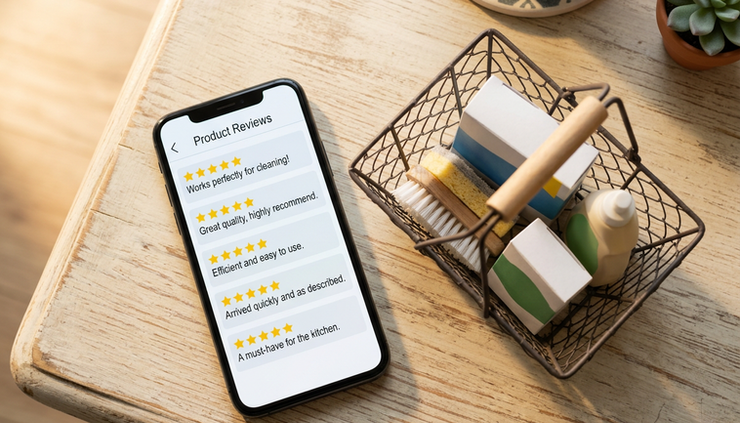
Read customer reviews like evidence
Customer reviews are useful, but only if you read them properly.
Do not stop at the star rating. A product with a high rating can still have flaws that matter to you. A product with a lower rating may have complaints about something you do not care about.
Start with recent reviews. These show current product quality, delivery service, and seller behaviour. Older reviews may relate to a previous version or a different supplier.
Next, read the middle ratings. Three-star reviews often give balanced detail. They mention what worked and what did not. One-star reviews can reveal serious faults, but some relate to delivery delays or user error. Five-star reviews can be helpful, but many are too short.
Look for clear, practical details:
Photos from real buyers
Comments after longer use
Notes on size, fit, sound, battery, build, or comfort
Repeated complaints about the same issue
Seller responses to problems
Be cautious with reviews that sound unnatural. Warning signs include repeated wording, lots of praise with no specifics, and many reviews posted around the same date. Also check whether the review refers to the same product. Some listings merge reviews from related items, which can make ratings less reliable.
The most useful review answers one simple question. Does this product perform well for the job you need it to do?
Check the seller before you pay
A good product from a poor seller can still cause trouble. Delivery may be slow. The item may not match the description. Getting a refund may take too long.
Shop from reputable websites whenever possible. Well-known shops and trusted specialist retailers usually give clearer product details, safer payments, and better support. Marketplaces can also be useful, but check the actual seller, not only the marketplace name.
Before paying, check:
The website address is spelled correctly
The site has clear contact details
Delivery and return information is easy to find
The seller has recent customer feedback
The product description is detailed and consistent
The checkout page uses a secure connection
The price is realistic
A secure website should show a padlock in the browser and use `https`. This does not prove the seller is honest, but it protects information sent through the site. If a site looks rushed, has broken pages, or uses strange wording, take care.
Avoid paying by bank transfer for online purchases from unknown sellers. It gives little protection if something goes wrong. Use a secure payment method instead. Credit cards, debit cards, and trusted payment services often provide better routes for disputes or chargebacks, depending on the purchase and provider terms.
Never share more information than needed. A seller does not need your bank password, full card PIN, or security codes outside the checkout process. If a message asks for this, stop.
Use strong passwords for shopping accounts. Avoid reusing the same password across several shops. If one site has a data breach, reused passwords can put other accounts at risk. Turn on two-factor authentication where available.
Read returns and warranties before buying
Return policies matter most when the product disappoints. Read them before checkout, not after delivery.
In the UK, many online purchases come with cancellation rights, but there are exceptions. Personalised goods, sealed hygiene products once opened, and perishable items can have different rules. Faulty goods are treated differently from items you simply change your mind about.
Check the return policy for:
Return window
How many days do you have to send the item back?
Condition rules
Can you open and test the product, or must it be unused?
Return postage
Who pays to send it back?
Refund method
Will you receive money back, store credit, or an exchange?
Proof needed
Do you need packaging, photos, order numbers, or labels?
Keep the packaging until you know the product works. Take photos if the parcel arrives damaged. Test the item early so you can report faults within the return window.
Warranties also deserve attention. A warranty can cover faults after the return period ends, but the terms vary. Check how long the warranty lasts, what it covers, and who handles the claim. Some warranties cover parts but not labour. Some require registration. Others exclude wear and tear, accidental damage, or misuse.
For higher-value products, save the receipt, order confirmation, serial number, and warranty document in one place. A folder in your email works well. Clear records make claims faster.
Build a safer shopping routine
Smart online shopping is a habit. The same checks work for small purchases and expensive items.
Use this quick routine before placing an order:
Confirm the exact product and model.
Check the features against your must-have list.
Compare the total price, including delivery.
Read recent and detailed customer reviews.
Check the seller’s reputation.
Read the return policy and warranty.
Pay with a secure method.
Save the receipt and order details.
This does not need to take long. For a low-cost item, it may take five minutes. For an expensive item, it may save you from a costly mistake.
If something feels wrong, pause. A deal that vanishes in ten minutes is often not worth the risk. Good products and fair prices come around again.
For a safer place to start, explore trusted product options at Stronics.
Frequently asked questions
How can I tell if an online shop is trustworthy?
Check the website address, contact details, return policy, payment options, and recent customer reviews. Be careful if the price is far lower than everywhere else or the site asks for unusual payment methods.
Are customer reviews always reliable?
No. Reviews can be incomplete, outdated, or fake. Read recent reviews, check buyer photos, and look for repeated comments. The pattern matters more than one strong opinion.
Is it better to buy from a marketplace or a retailer?
Both can work. With a marketplace, check the individual seller as well as the platform. With a retailer, check its return policy, warranty support, and customer service record.
What should I do if my order arrives damaged?
Take photos of the packaging and product straight away. Keep all packaging. Contact the seller quickly with your order number and evidence. Ask for the next step in writing.
Which payment method is safest for online shopping?
Use a secure checkout with a card or trusted payment service. Avoid bank transfers to unknown sellers. Check your provider’s protection rules for disputes and unauthorised payments.

Make each purchase easier to trust
The best online buys rarely come from luck. They come from clear checks.
Research the product. Compare the real price. Read reviews with care. Check the seller. Understand the return policy and warranty. Pay securely.
Do that, and online shopping becomes simpler, safer, and far less stressful.

Comments